



Addressing the Lack of Training Data - Using Generative AI to Evolve Event Detection AI
【Current Status and Challenges of Event Detection】
The Ministry of Land, Infrastructure, Transport and Tourism has installed approximately 20,000 cameras (CCTV) to monitor roads nationwide to improve the efficiency of road management and to provide rapid response to disasters or other abnormal events. Recent years have seen an increase in Event Detection AI, which detects abnormal events using AI, with the aim of using CCTV to further improve the efficiency and sophistication of road management.
One hurdle in the introduction of this technology is the limited detection accuracy and range of detectable abnormal events. This is due to the lack of training data (data used to train AI) on abnormal events to be detected, for improving the AI accuracy.
To address this, the Advanced Technology Research Team has conducted research on enhancing the functionality of Event Detection AI using generative AI.
【What is Generative AI?】
Generative AI refers to artificial intelligence that can generate text, images, videos, and various other types of content.
While conventional AI is a technology that makes judgments and predictions based on learned data, generative AI can create content based on a vast amount of foundational knowledge learned in advance.
【Research Using Generative AI (1)】
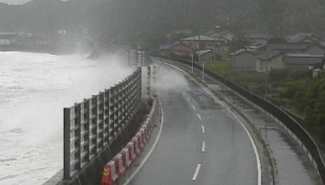
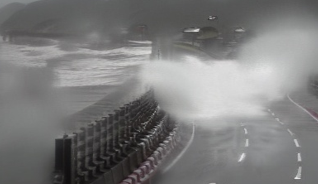
To address the challenges posed by the limited availability of training data that can improve the accuracy of Event Detection AI, we utilize generative AI that can create images from text input to generate images of abnormal events, and we are currently researching whether this process can improve accuracy. Figure 1 is an actual image of a wave overtopping, and Figure 2 is a similar image created by generative AI.
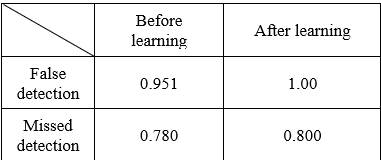
As shown in Table 1,we confirmed that the Event Detection AI's accuracy for wave overtopping improved (the closer the value is to 1, the fewer instances of false detection and missed events).
|
|
|
【Research Using Generative AI (2)】
Traditionally, it has been necessary to collect large amounts of training data for each specific abnormal event that the AI is meant to detect, but generative AI has the potential to detect a wide variety of abnormal events even without training data. This study aims to develop a user-friendly system for road administrators by utilizing generative AI that is capable of explaining events occurring in images based on image and text inputs. Figure 3 shows the results obtained by inputting images of flooded areas (roads covered in water) into generative AI. It can detect abnormal events and issue warnings while also accurately describing the detected events.
Going forward, we will continue our research with the aim of further improving accuracy and generating more precise descriptions while also reviewing the detection accuracy of various abnormal events.
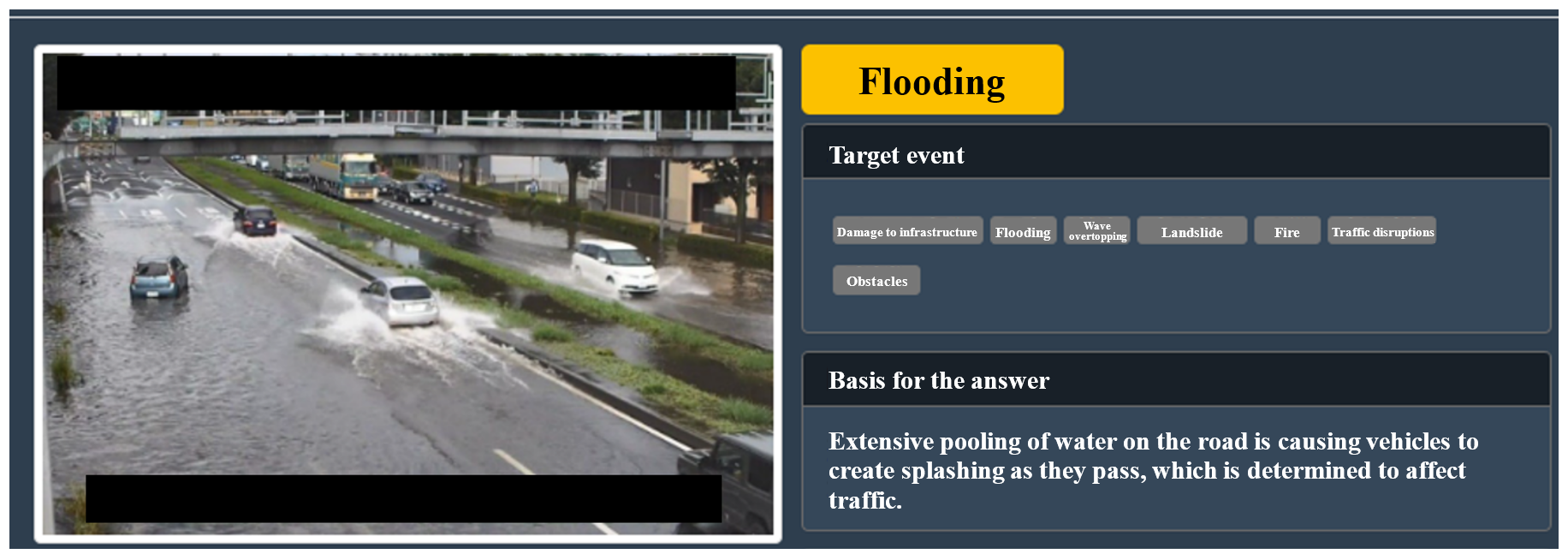
Figure 3: Event detection using generative AI
(Contact: Construction Technology Research Department Advanced Technology Research Team)
Estimating the Deterioration Mechanism of Asphalt Pavement due to the Effects of Water
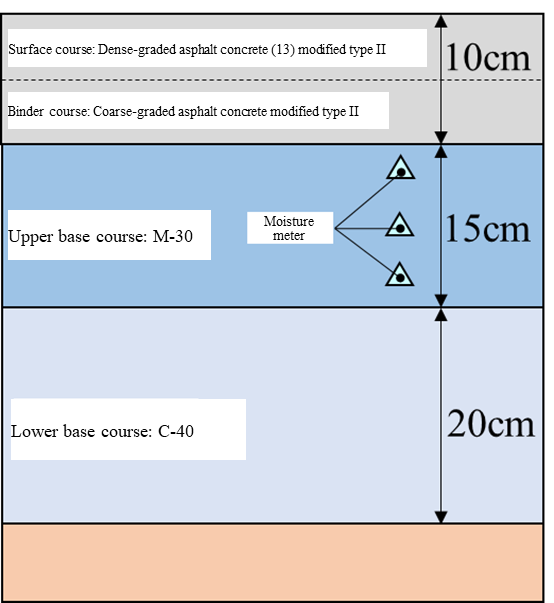
(crushed stones made by crushing
rocks and boulders with a crusher)
is generally used as the material.
* Upper base course: Mechanically
stabilized graded aggregates
(crushed stones adjusted to an
appropriate particle size)
are generally used as the material.
Figure 1: Pavement structure of
the test section
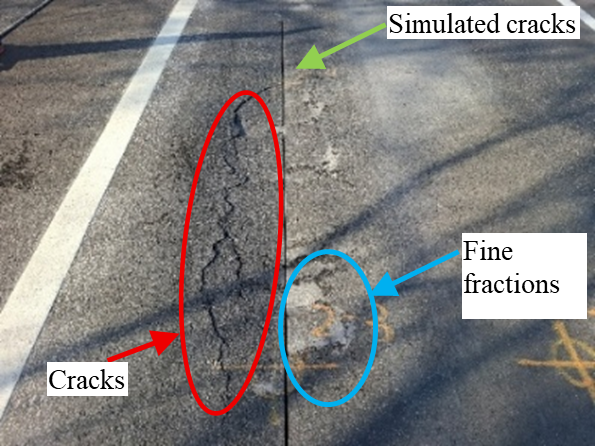
Figure 2:
Cracks and pumping
(after 600,000 wheel passes)
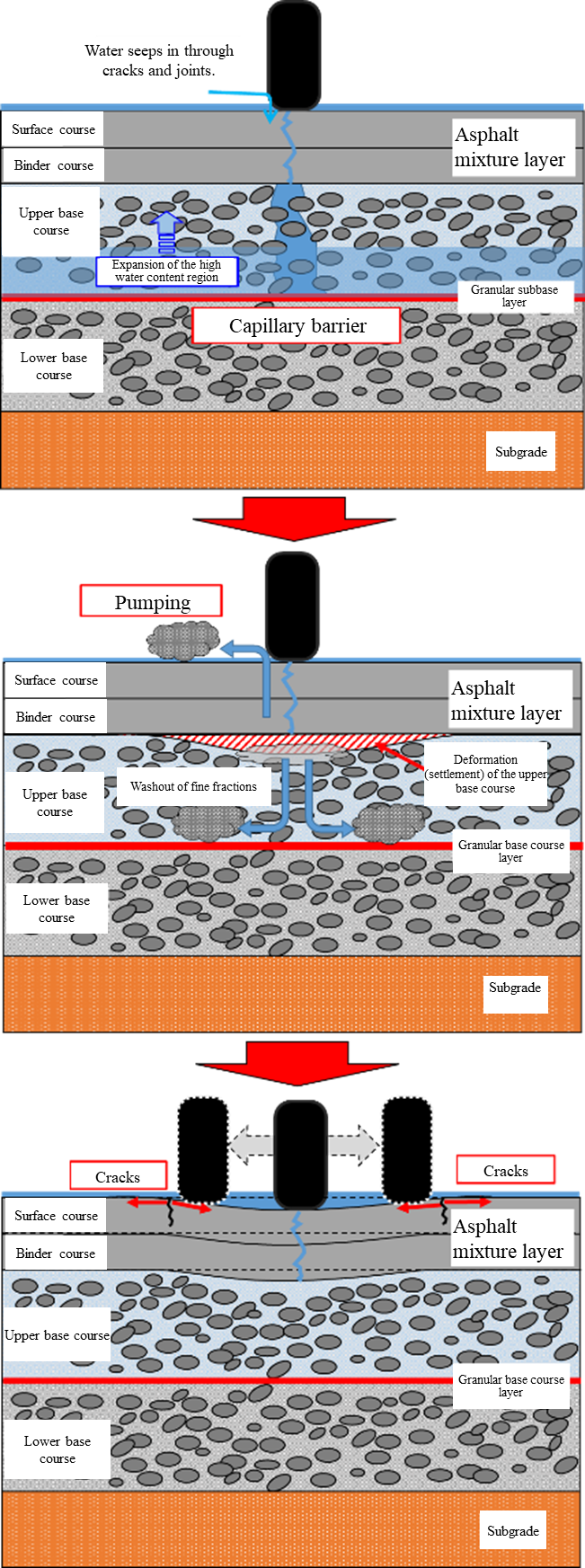
Figure 3:
The degradation mechanism
inferred from this test
Approximately 95% of paved roads in Japan are paved with asphalt concrete. In recent years, budget constraints are necessitating more efficient pavement management, creating an urgent need to extend the lifespan of asphalt pavement.
One of the factors that hinders this is premature deterioration (deterioration that occurs earlier than expected). Asphalt pavement does not deteriorate evenly; rather, its progression and location vary depending on the conditions of traffic, weather, and structure.
Given this, it is necessary to understand the mechanisms of premature deterioration and take appropriate measures.
Asphalt pavement has an asphalt mixture on its surface course and is generally composed of a surface course, binder course, and base course(Figure 1)/.One of the factors that causes the premature deterioration of asphalt pavement is the weakening of the base course due to the repeated application of traffic loads while water infiltrates into the pavement through cracks.
To address this, since 2023, the PWRI has been conducting accelerated loading tests (to reproduce the deterioration process quickly) using automated heavy vehicles at a circular pavement driving test site, with the aim of understanding the mechanism of premature deterioration and proposing appropriate measures to extend the lifespan.
In addition, to compare the deterioration status, we established a section with simulated cracks penetrating the asphalt mixture layer (the cracked section) and a section without simulated cracks (the normal section), and conducted experiments by artificially spraying water on the road surface to reproduce premature deterioration due to water infiltration into the pavement.
In the cracked section, the experimental results demonstrated that new through-cracks appeared after fewer vehicle passes than initially expected. Furthermore, pumping was observed in the simulated crack areas, where fine fractions of the base course material (soil particles less than 75 μm) were ejected (Figure 2). You may even have witnessed pumping occurring on a road.
To determine the cause of this damage, we inspected the condition of the upper base course and found that it was saturated with a large amount of water up to the top of the upper subbase (high water content condition). Normally, water that infiltrates into the pavement is thought to seep into the lower courses, but this experiment suggests that the capillary barrier (the water-impermeable effect that occurs at boundaries of different particle sizes), which is recognized in the field of geotechnical engineering, occurred at the boundaries of base course layers with different particle sizes within the pavement, resulting in a high water content condition up to the top surface of the upper base course.
The degradation mechanism inferred from these results is shown in Figure 3. The deterioration in this experiment may have been caused by the following sequence of events: the formed capillary barrier maintained a high water condition in the upper base course, and under repeated traffic loading, fine fractions within the upper base course migrated and were washed out, leading to deformation (settlement) at the top surface of the upper base course.
By continuing to elucidate the deterioration mechanisms in this way and proposing countermeasures accordingly, we will contribute to extending the lifespan of asphalt pavement.
(Contact: Pavement Research Team)
Research on a Novel ASR Repair Method Using Zeolite
Concrete remains a primary construction material due to its ability to be molded into any shape and its high compressive strength and durability. However, while concrete was once considered maintenance-free, unexpectedly premature deterioration became apparent around 1980. Since then, ensuring durability has become a major focus.
While concrete degradation manifests in various forms, alkali–silica reaction (ASR) is considered one of the three major causes of damage to road bridges, alongside fatigue and salt damage. In a high-pH alkaline environment, the reactive silica (SiO₂) that is contained in aggregates like sand and gravel within the concrete mix reacts chemically with alkali metal ions such as sodium and potassium that are primarily present in the cement. This reaction generates alkali–silica gel (hereinafter referred to as “gel”). When this gel absorbs water and expands, it causes significant cracking in the concrete (Photo-1) . Currently, to inhibits ASR, one of the following measures must be implemented: avoidance of reactive aggregates, limiting of the total alkali content in concrete to 3 kg/m³ or less, or the use of blended cement. ASR that occurs in structures built in the past without these measures requires that the structure undergo appropriate repairs.
ASR repairs primarily involve crack injection and cross-section restoration, along with surface coating to block water and to prevent the gel from absorbing water. However, cases have been reported where ASR expansion has continued even after repair, leading to renewed deterioration. Consequently, a method has recently been developed where lithium nitrite is pressure-injected into the concrete to suppress the gel expansion itself. Nitrite is subject to environmental standards, making its application difficult for structures like road bridges near ports or rivers. Therefore, a new repair method is being investigated that focuses on the cation exchange function of zeolite, which possesses numerous voids. In this method, lithium-type and acid-treated zeolites are injected into concrete cracks or boreholes. These zeolites deliver lithium ions to inhibit gel expansion and hydrogen ions to neutralize the high alkalinity (Photo-2) .
Accelerated 40°C immersion tests demonstrated that increasing the zeolite replacement rate in repair materials effectively suppresses ASR expansion, achieving performance comparable to lithium nitrite. Among the methods tested, drilling and grouting was more effective than crack injection because it affords a higher volume of zeolite replacement (Figure-1) . Moving forward, we plan to apply this method to actual structural repairs to verify its effectiveness and to propose a zeolite-based ASR repair method (draft).
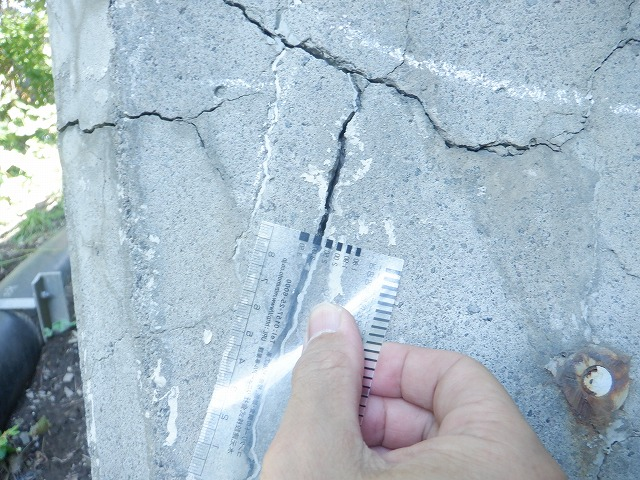
Photo-1
Cracking and unevenness likely caused by ASR
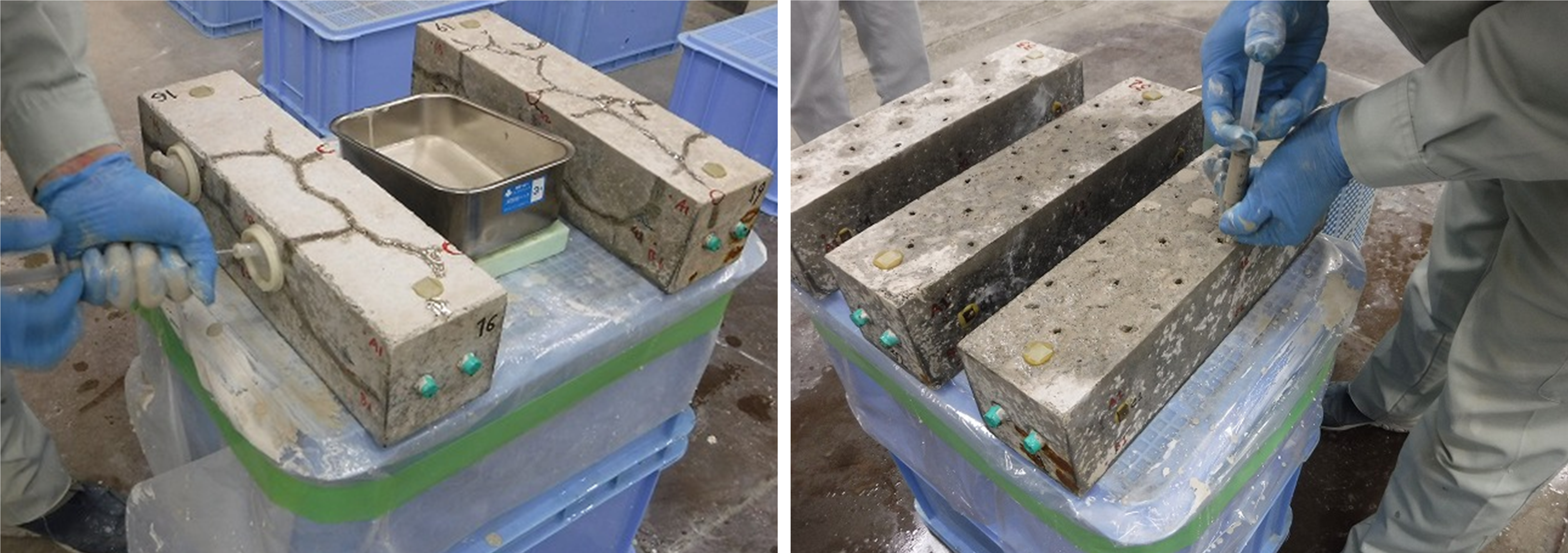
Photo-2
Zeolite injection (left) and borehole grouting (right)
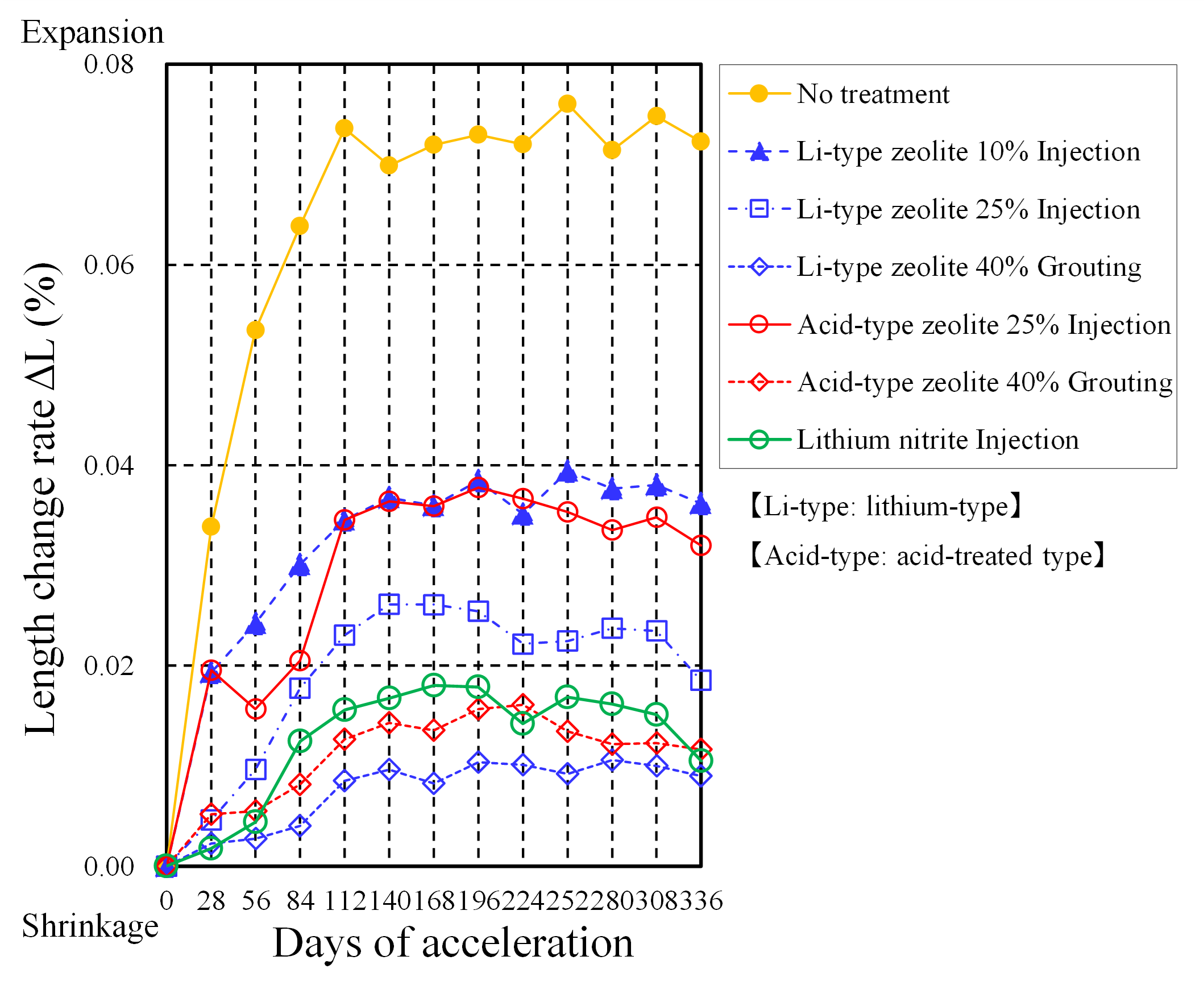
Figure-1
Length change rate in accelerated ASR test after zeolite repair
(※Note: This figure is adapted from Figure-7 in the reference.)
[References]
SHIRAI Yoshiaki, ENDOH Hirotake and MIHARA Norihiro: Basic Study on the Use of Zeolite to Suppress the Alkali–Silica Reaction in Existing Concrete, Monthly Report of the Civil Engineering Research Institute for Cold Region, No. 866, pp. 10-18, 2025. 2.
(For more information : Civil Engineering Research Institute for Cold Region Materials Research Team)